Over the past year, I’ve tested event management platforms across everything from 50-person executive dinners to 500-person industry conferences.
In this guide, I’ll walk you through the 10 event attendance tracking software I can guarantee. Each one earned its spot by proving its value with real events, real attendees, and real business outcomes.
Here’s the breakdown:
- InviteDesk: Best for B2B teams that need event data to win new customers and grow existing accounts, not just selling tickets.
- SpotMe: Best for large enterprises running high-stakes, multi-session conferences with strict security requirements
- Bizzabo: Best for B2B marketing teams that need to connect event attendance directly to pipeline and revenue
- Cvent: Best for organisations managing large-scale, logistically complex events with 1,000+ attendees
- InEvent: Best for teams that need a professional, full-featured platform without a steep learning curve
- Whova: Best for conferences where attendee engagement and networking drive the value of the event
- Eventbrite: Best for straightforward, open-registration events where speed of setup is the priority
- Eventtia: Best for mid-market teams that prioritise responsive, hands-on customer support
- vFairs: Best for organisations hosting virtual trade shows or exhibitions with immersive 3D environments
Let’s begin:
See how you can cut down you no-show rate by over 40% with InviteDesk.
What Is Event Attendance Tracking Software?
Event attendance tracking software helps you monitor, manage, and analyse who registers for your events, who actually attends, and which guests create real business value. Unlike basic registration forms that just collect RSVPs, comprehensive tracking software follows attendees through their entire journey and shows you which events drive revenue.
The best tools combine registration management with real-time check-in, guest quality tracking, and ROI analytics. They show you not just how many people showed up, but whether the right people showed up—and what happened after they left.
I’ve found these platforms invaluable because they:
- Replace spreadsheet chaos with organised, automated workflows
- Let sales and marketing teams see the same real-time guest data
- Track which events generate actual pipeline, not just attendance numbers
- Make check-in take seconds instead of minutes per person
When used correctly, event attendance tracking software transforms guesswork about event value into concrete data that CFOs actually care about.
The 10 Best Event Attendance Tracking Software Tools
1. Invitedesk

InviteDesk’s event attendance tracking system is built for B2B organisations that use events to win new customers and grow existing accounts, not just selling tickets.
Where most tracking software begins at check-in and focuses on tracking ticket sales and logistics, InviteDesk helps you invite, register, and track guests who are most likely to influence business growth across the event lifecycle.
- Before the event, you can share and track invitation quotas across the sales team or departments, so that only your most valuable guests are guaranteed to fill the seats.
- On arrival, every check-in feeds a live dashboard and triggers instant notifications to the right account manager — so your sales team knows exactly who just walked in and can act on it immediately.
- After the event, verified attendance data flows directly into your CRM, giving sales a clean list of who was actually present and the behavioural history to make the next event’s guest list even sharper.
That way, fewer seats go to waste, your team spends less time chasing RSVPs, and every pound spent on the event is accounted for in your CRM.
See InviteDesk attendance tracking in action.
How Invitedesk attendance tracking works:
Before the event: fill your seats with the contacts who can move a deal forward
Most B2B organisations’ event tracking processes fail to generate results because their pre-event process gets the wrong people in the room. Aside from the manual work across spreadsheets, a fundamental disconnect between Sales and Marketing is the root cause.
Sales knows which contacts actually matter. Marketing owns the event and controls the guest list. With no shared system connecting them, the guest list becomes a blind spot.
- Marketing sends invitations based on what’s in the database.
- Sales invites clients over the phone and forgets to register them.
- By the time anyone compares notes, the list is already out of date.
This typically results in a high no-show rate and a room that, on paper, looks full but commercially is underperforming.
InviteDesk solves this problem by giving your marketing and sales teams a single, shared system for guest selection, invitation, and tracking — minus the manual “Excel” work.
Three essential tools power this function:
- Invite quota tracking: Before the event, you allocate a specific number of seats to each account manager or department, ensuring that each sales rep has a defined set of spots they’re responsible for filling with the contacts most likely to drive business forward.
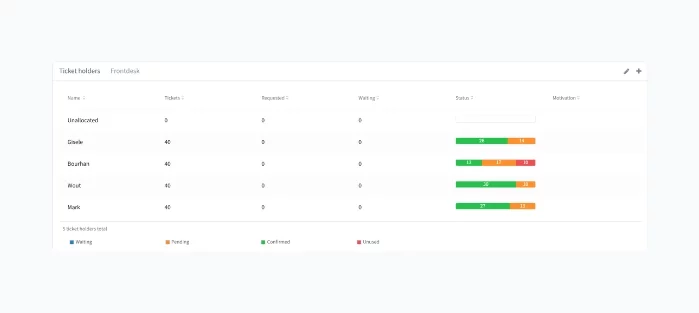
- Engagement history tracking: While building your guest list, you can see how many times each prospect has been invited, whether they registered, and whether they actually showed up. If a contact has confirmed three times and attended zero, you have the data to stop allocating a seat to them at your next high-cost hospitality event and give it to someone more likely to attend.
- Centralised real-time dashboard: Both marketing and sales see the same live view: who’s been invited, who’s opened, who’s registered, who’s declined, and who hasn’t responded. When a key contact is still pending a week out, the account manager can see it themselves and follow up personally — no chasing internal teams for updates, no waiting for a weekly spreadsheet.

The combined effect: a 40% reduction in no-shows and 25% more senior decision-makers in the room. See the case studies.
During the event: know the moment your most important guests arrive
On-site tracking at most B2B events relies on paper lists or slow manual processes. Once a guest is in the room, the commercial team loses visibility entirely because there’s no mechanism connecting the registration desk to the sales team.
- Sales teams spend the event mingling without direction
- High-value guests stand ungreeted
- Conversations happen by chance rather than by design
- The premium experience the event was meant to deliver quietly falls apart
Invitedesk changes that. On the day, InviteDesk’s ScanApp turns any mobile device into a professional QR scanner, so check-in is fast, hardware-free, and feeds directly into a centralised live dashboard.

Last-minute walk-ins and forgotten tickets are handled on the same interface through the Frontdesk feature, meaning every attendee is tracked regardless of how they arrive.
Marketing has a real-time view of headcount against registrations and can see exactly which contacts are still pending — and act on it. So if a critical decision-maker is missing thirty minutes, the team can trigger a personal call before the window closes.

On the sales side, the moment a specific contact scans in, their account manager receives an instant push notification on their phone. The difference between Invitedesk’s approach and others is that Invitedesk’s on-site tracking makes it possible for sales to engage your most important guests the moment they walk through the door— the highest-value window, with context, rather than finding them by chance when the room is already in full swing.
That way, every key guest gets a planned, personal experience. That’s the commercial value of knowing who just arrived.
After the event: follow up on who was actually present.
InviteDesk pushes verified attendance data directly into your CRM [Salesforce, HubSpot, or Dynamics 365] — the moment the event ends. Post-event surveys are automatically triggered only to those who were physically present, so feedback is relevant, and response rates reflect genuine experience. And instead of crushing spreadsheets, Sales receives a clean, annotated list of confirmed attendees and can follow up while the interaction is still fresh.

The reporting goes beyond registration counts.
- You can track how many leads were qualified or moved through the sales funnel as a direct result of the event, giving you the commercial value of each event in pipeline terms.
- Alongside that, the platform documents the operational efficiency gains — a 50% reduction in administrative workload and 75% savings in sales time — which lowers the cost side of the ROI equation.
- NPS scores and attendee engagement metrics are packaged into a report that your leadership team can use to evaluate and justify the event programme as a whole.
Related: How to Accurately Track Event Attendance: A Step-by-Step Guide
Over time, the same system builds a behavioural picture of each contact across your entire event programme. You can see, across six to twelve months, how many times a contact was invited, whether they registered, and whether they actually attended.
And because all of this data lives in your CRM rather than a separate platform, the commercial team can trace the full journey, making the revenue impact of your event programme fully transparent and measurable.
See how InviteDesk can reduce your event no-show rate by over 40%.
2. SpotMe

SpotMe is an event attendance tracking software tool for large enterprises running complex conferences. It helps companies manage multi-day events with thousands of attendees while keeping everything organised and secure.
The platform tracks attendance in real time across in-person, virtual, and hybrid sessions. QR codes automatically record who attends each session, and custom mobile apps let attendees interact with polls, Q&A, and session content. All data syncs with CRMs like Salesforce, Marketo, and HubSpot so teams can see engagement without manual exports.
SpotMe also provides analytics to show which sessions and content perform best. This helps event managers understand what resonates with attendees and make improvements for future events. Dedicated support is available throughout, making it easier to handle high-stakes conferences without technical stress.
Pricing: Contact SpotMe for a custom quote based on event sise and complexity.
3. EventBookings
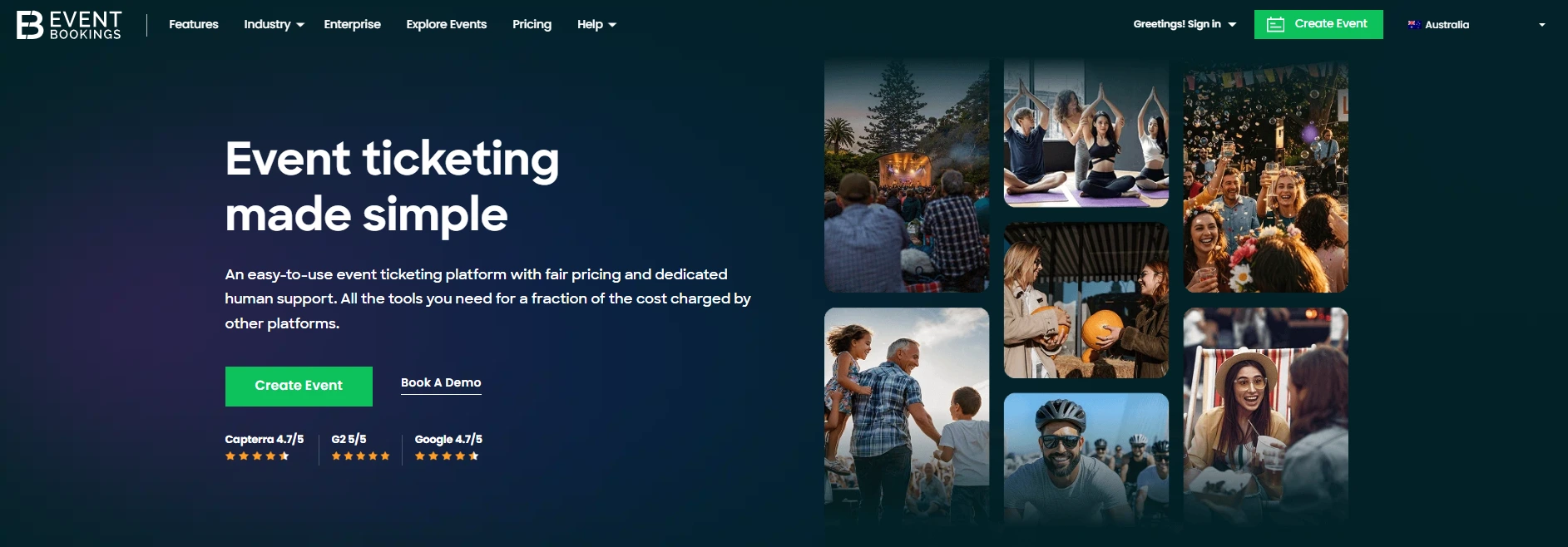
EventBookings is an affordable event attendance tracking and ticketing platform designed for organisers who want to manage registrations, check-ins, and attendee engagement without the complexity of enterprise software. Suitable for conferences, workshops, training sessions, community events, cultural events, concerts and fundraisers, it combines event registration, ticket sales, and attendance management in a single platform.
The platform offers QR code check-in, real-time attendee tracking, digital tickets, fundraising opportunities, and custom registration forms. Organisers can see attendance as it happens, manage different ticket types, and use dashboards to track registrations and event results. EventBookings works for in-person, virtual, and hybrid events, so it fits many event types.
The QR code check-in system is especially helpful. It lets event staff quickly check tickets and keep track of attendance, so people do not have to wait in long lines. The real-time dashboard is also useful because organisers can see registration and attendance numbers right away during the event.
These tools help organisers spend less time on paperwork, make events better for attendees, and understand how their events are doing. If you are a business, association, nonprofit, or training provider looking for an affordable event management option, EventBookings gives you useful features without making things complicated.
Pricing: EventBookings offers cost-effective pricing models in the event management industry. Pricing may vary depending on country or region, so it’s best to visit the EventBookings pricing page for the most up-to-date details and plan information.
4. Bizzabo

Bizzabo is a leading event attendance tracking platform for B2B marketing teams. It focuses on connecting event participation directly to revenue outcomes, helping marketers show ROI to executives.
The platform tracks session-level attendance, showing who participates, how long they stay, and what content they engage with. Smart Klik badges use Bluetooth to automatically capture attendee behavior without manual check-ins. Lead scoring then links this engagement data directly to your CRM, making it easier for sales to prioritize follow-up. Studio-quality video tools support virtual and hybrid events, while the reporting dashboard provides clear ROI metrics for every session.
One feature I’ve found particularly useful is the lead scoring system. It highlights which attendees are most engaged, so you don’t waste time chasing uninterested contacts. Similarly, session attendance tracking gives real insight into which event content resonates—and which doesn’t. Watching how attendees interact with sessions often reveals surprises you wouldn’t see in traditional reports.
After acting on these insights, teams can adjust their event strategies, improve content engagement, and increase the value of every marketing dollar spent.
Pricing: Custom quote-based pricing tailored to your event volume and needs.
5. Cvent

Cvent is an event attendance tracking platform designed for organisations managing large-scale events with complex logistics. It has been the enterprise standard for event management for over two decades, handling scale and complexity better than most alternatives.
The platform provides mobile check-in with OnArrival, capable of processing hundreds of attendees per hour. Real-time dashboards show who is attending which session, while comprehensive attendee management tracks everything from session registrations to hotel bookings. Cvent integrates with most major CRMs and marketing automation platforms, consolidating attendance, surveys, and ROI metrics into a single reporting view.
One feature I’ve found particularly useful is the real-time attendance dashboards. They allow event teams to monitor session participation as it happens, giving immediate insight into engagement patterns. Similarly, the OnArrival check-in system prevents bottlenecks at busy events, ensuring attendees get processed quickly and efficiently.
These tools help event organisers plan better, follow up promptly, and report on ROI more accurately. The combination of check-in, attendee management, and integrated reporting means teams spend less time manually consolidating data and more time optimising the event experience.
Pricing: Custom quote-based pricing; typically requires direct sales discussions to determine costs.
6. InEvent

InEvent is an event attendance tracking platform designed for organisations that prioritise ease of use without sacrificing functionality. The platform makes enterprise-level features accessible through an intuitive interface, so teams can get productive quickly without extensive training.
Key features include AI-powered facial recognition for automatic check-in, real-time attendee tracking across virtual, hybrid, and in-person events, and Virtual Lobby networking with 1:1 video calls and group rooms. InEvent also supports white-labeling for fully branded experiences and offers comprehensive live streaming with engagement analytics.
One feature I’ve found particularly helpful is the real-time attendee tracking. It allows event managers to see who is participating in which sessions instantly, making follow-up and engagement analysis much easier. Similarly, the AI-powered check-in speeds up registration, even at large events, while Virtual Lobby networking provides structured ways for attendees to connect digitally.
These tools help event teams focus on the attendee experience rather than wrestling with complicated setups or manual processes. White-labeling ensures events match brand standards, and the credit-based model provides flexibility for varying event sizes without committing to fixed tiers.
Pricing: Credit-based pricing; varies depending on event size and usage.
7. Whova

Whova is an event attendance tracking platform designed for conference organizers who want to boost attendee engagement. The platform focuses on creating an interactive experience that encourages participation while providing accurate attendance data.
Key features include a mobile app with community boards, networking tools and gamification, session-by-session QR code check-in, certificate issuance for CEU compliance, event marketing tools, and real-time analytics.
The mobile app is particularly effective at driving engagement. Attendees can network, participate in discussions, and earn points through gamified activities, which helps maintain high adoption rates. Session check-ins are quick, and the real-time analytics give organizers a clear view of attendance and engagement.
Pricing: Custom; varies depending on event size.
8. Eventbrite

Eventbrite is an event attendance tracking platform for small to mid-size events that need simple and fast registration. It prioritizes quick setup without complex configurations.
Key features include QR code check-in via mobile app, real-time attendee tracking, automated email reminders, public event discovery, and simple reporting with data export.
The platform is especially useful for rapid deployment. A registration page can be live within minutes, and the free tier allows organizers to launch events at no cost. The public marketplace helps small events reach a wider audience organically.
Pricing: Free for free events; paid plans start at 3.5% + $0.99 per ticket.
9. Eventtia

Eventtia is an event attendance tracking tool designed for mid-market companies that value responsive support. The platform emphasizes customer service, with first responses often within minutes.
Key features include a real-time check-in app with offline mode, attendee segmentation, integrated communications via email, WhatsApp, and SMS, a drag-and-drop website builder, and payment processing with Stripe, PayU, and others.
The standout feature is the support. Organizers report that the team often implements solutions directly, reducing downtime and technical frustration. The offline check-in ensures events continue smoothly even with unreliable WiFi.
Pricing: Custom; credit- or usage-based depending on event size.
10. vFairs

vFairs is designed for organizations hosting immersive virtual events with exhibitor components. It provides 3D virtual venues that simulate real-world conference centers, improving engagement and tracking accuracy.
Key features include 3D virtual environments, session-level analytics, lead capture integration for exhibitors, dedicated project managers for each event, and gamification and networking tools.
The 3D venue experience is particularly effective at keeping attendees engaged and capturing actionable participation data. Dedicated project managers ensure smooth execution, while customizable environments allow full branding for virtual events.
Pricing: Custom; based on event size and requirements.
Best Event Attendance Tracking Software: Your Questions Answered
What is event attendance tracking software?
Event attendance tracking software monitors and records who registers for your events, who actually attends, and how they engage throughout the experience. Unlike basic registration tools, comprehensive tracking software follows attendees through their entire journey and connects attendance to business outcomes.
Why does guest quality matter more than guest quantity?
Filling 100 seats with random registrants costs the same as filling 100 seats with your top customers and best prospects—but the business outcomes differ dramatically. Guest quality determines whether events generate pipeline, strengthen relationships, and justify budgets. Tracking who attends matters more than just tracking how many attend.
How does sales-marketing alignment improve event ROI?
When sales and marketing teams see the same real-time guest data, sales takes ownership of inviting their high-value customers while marketing tracks accountability. This collaboration ensures events target the right people instead of just hitting registration numbers. The result is better attendance from people who actually matter to your business.
Do attendance tracking tools work for small, high-value events?
Yes—in fact, attendance tracking becomes more critical for smaller, high-value events. When you’re hosting a 25-person executive dinner where every guest costs $500, knowing exactly who confirmed, who’s likely to attend, and who needs follow-up directly impacts whether the event succeeds or fails.
Can event tracking software reduce administrative workload?
Modern platforms automate workflows that previously required manual spreadsheet management. Email reminders send automatically. Waitlists manage themselves. Registration data updates in real-time. Organizations report saving approximately 50% of administrative time previously spent on event logistics.
How do these tools integrate with CRM systems?
Professional event platforms integrate with major CRMs including Salesforce, HubSpot, and Microsoft Dynamics. Event registrations, attendance, and engagement automatically update contact records in your CRM—eliminating manual data entry and ensuring sales teams see complete event participation history.
See how InviteDesk can reduce your event no-show rate by over 40%.
The Best Event Attendance Tracking Software: My Top Recommendations
After testing all nine platforms across different event types and scenarios, here’s how I’d choose:
If you’re running B2B events where guest quality determines ROI, choose InviteDesk. The platform’s focus on getting the right people to attend—plus sales-marketing alignment and 50% time savings on admin work—directly solves the problems that make B2B events successful or wasteful.
If you’re managing enterprise events for Fortune 500 companies, choose SpotMe. The security, reliability, and white-glove service justify premium pricing when event reputation is on the line.
If you need to prove event ROI with hard pipeline data, choose Bizzabo. The Klik badges and automatic lead scoring connect attendance directly to revenue in ways that make CFOs care.
If you’re managing large-scale conferences with 1,000+ attendees, choose Cvent. Nothing else handles that level of logistics complexity as comprehensively.
If you want ease of use without training requirements, choose InEvent. Professional results without weeks of learning.
If attendee engagement matters more than anything else, choose Whova. The app keeps attendees active, improving data quality automatically.
If you’re running simple events and need to launch fast, choose Eventbrite. The 15-minute setup removes all barriers.
If responsive customer support is your top priority, choose Eventtia. Sub-7-minute response times make a genuine difference.
If you’re running virtual trade shows with exhibitors, choose vFairs. The 3D environments create engagement traditional webinars can’t match.
The right event attendance tracking software transforms events from budget-draining activities into strategic, measurable investments. Choose based on whether you need to fill seats or fill seats with the right people—that distinction changes everything.
Ready to increase your event ROI by 25%? Start with a platform that prioritizes guest quality over guest quantity, automates administrative chaos, and gives sales and marketing teams shared visibility into who’s actually attending.


![Cvent vs Eventbrite: We Reveal The Best Option for B2B Events [With Infographs]](https://invitedesk.com/app/uploads/2026/03/Cvent-vs-Eventbrite-600x480.webp)