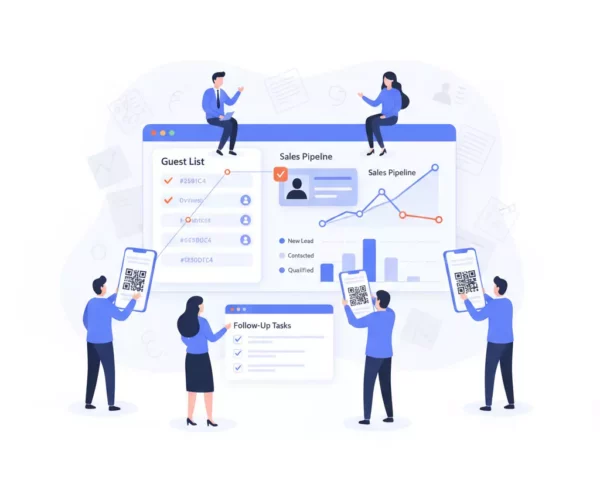
If you’re weighing Whova against InviteDesk, it’s tempting to treat the bigger, award-winning platform as the safer default. But the two aren’t built to win the same event — and choosing the wrong one shows up in ways you feel: the client who confirms and never arrives, the account manager who finds out too late that their biggest prospect was never on the invite list, the follow-up that goes out two days cold because attendance data was still stuck in a spreadsheet. Which platform fits comes down to the kind of events your team actually runs.
Key takeaways
- Whova is built for events where attendees discover value after they arrive: large conferences, association meetings, education and trade shows where the win is engagement, networking, and a smooth multi-session experience.
- InviteDesk is built for events where the right people have to be recruited before the doors open: client seminars, executive briefings, VIP hospitality, where guest quality outweighs headcount and sales is a stakeholder, not a spectator.
- Their core difference lies in how each platform handles guest registration. Whova maximises engagement among attendees who have already registered. InviteDesk focuses on who should be in the room in the first place, then gets them there and into your CRM.
- Choose Whova if you run conferences, trade shows, or large multi-session events and your priority is keeping hundreds of registered attendees engaged, networking, and oriented once they arrive.
- Choose InviteDesk if you run curated, relationship-driven B2B events and your priority is getting the right accounts into the room and turning their attendance into a pipeline your sales team can see.
And if CRM integration is key to how your team measures event ROI, Invitedesk might be the better option. With InviteDesk, every rep manages their own guest list from their phone: RSVPs, check-ins, and arrival alerts in one place, syncing two ways with your CRM out of the box. When CRM is how your team measures event ROI, that’s what cuts no-shows by around 40% and puts roughly 25% more senior decision-makers in the room.
See the full invitation-to-CRM workflow in 20 minutes
Whova vs InviteDesk at a glance
| Whova | InviteDesk | |
|---|---|---|
| Best for | Conferences, trade shows, association, and education events | Curated B2B relationship events (seminars, hospitality, executive briefings) |
| Standout feature | Award-winning attendee app with networking and matchmaking | Personalised and automated B2B event invitation workflow that reduces no-show rates by 40% |
| Pros | Strong engagement tools, easy attendee experience, and well-regarded support | Strong sales-marketing collaboration, account-level visibility, quotas, and arrival alerts from invitation onward |
| Cons | Add-ons are priced separately, renewal costs can rise, and notifications may become noisy | Not built for large multi-track conferences or virtual event hosting |
| Pricing | Custom per-event quote; free for free events; 3.0% + $0.99 per paid ticket | From €232/month (annual) or €1,320 for a single event |
| Guest model | Open and large-scale registration | Known, curated guest lists by account |
| CRM integration | Basic integration via middleware (Zapier and select native integrations) | Native two-way sync with Salesforce, HubSpot, and Microsoft Dynamics 365 |
Who Whova is best for

Whova is the stronger choice if your events look like this:
- You run conferences, trade shows, or association and education events where the audience is large and the goal is to keep people engaged across many sessions.
- Attendee networking is a core outcome, you want matchmaking, in-app messaging, discussion threads, and a digital agenda that hundreds of people navigate at once.
- You need speaker, abstract, and exhibitor management alongside the app, and a polished mobile experience matters to your sponsors and attendees.
- Your event opens to open or broad registration, and the priority is a smooth, modern experience once people have signed up.
- You have the budget and organiser capacity to absorb a dense, feature-heavy platform — and ideally the event generates revenue, which is where Whova’s users say its cost makes the most sense.
Whova has powered tens of thousands of conferences and is recognised year after year for its event app. For a large, revenue-generating conference, that reputation is earned.
See our Whova alternatives guide for a broader comparison.
Who InviteDesk is best for

InviteDesk is the stronger choice if your events look like this:
- You run 5 to 20 relationship-driven events a year — client seminars, hospitality days, executive dinners, dealer events — rather than a handful of large conferences.
- Your guest lists run 15 to 750 people where every presence or absence carries commercial weight, and who’s in the room matters more than how many.
- Sales owns the relationships and needs to be involved from the invitation stage, with visibility into which of their accounts said yes.
- You work in financial services, automotive, construction, professional services, or the public sector, where personalised outreach and data security aren’t optional — and where ISO 27001 certification, GDPR compliance, and European data residency are requirements, not nice-to-haves.
Whova vs InviteDesk: feature-by-feature
Guest list & invitation control
Whova: Registration is built to fill a room from a broad audience, then engage the people who sign up.
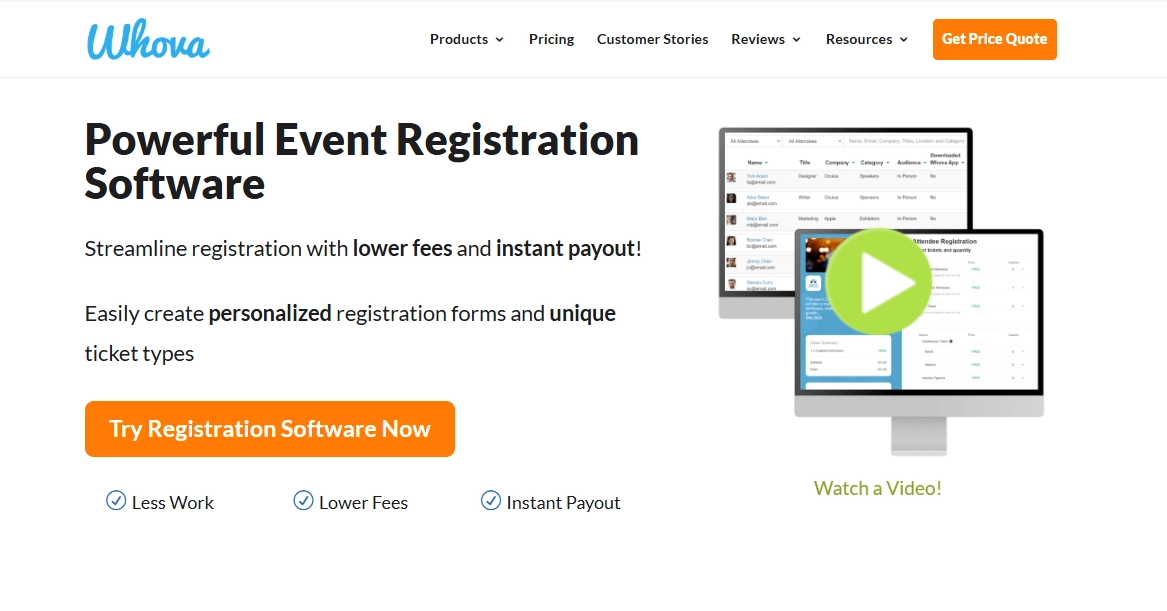
- Registration is built for open or large-scale sign-up — ticket types, custom forms, early-bird, invite-only and member-exclusive pricing tiers.
- The app’s value builds once attendees are registered and their profiles populate the system.
- Segmentation happens at the ticket-type level rather than the account-relationship level.
InviteDesk: You start from the guest list you already have, not from an open page.
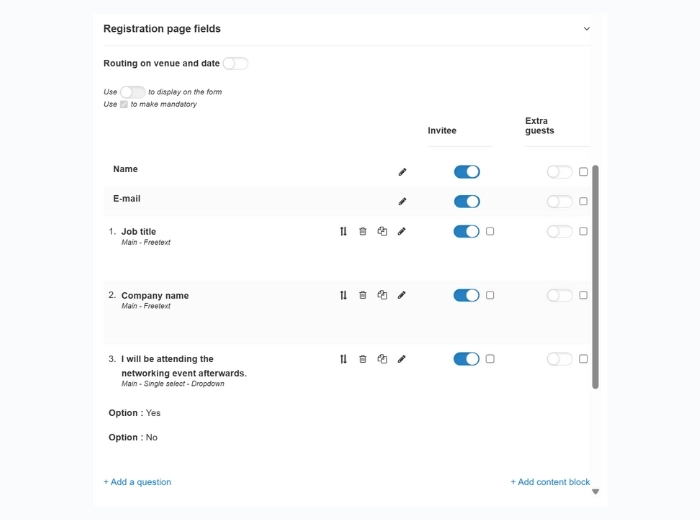
- You start from a known guest list — import target accounts and contacts, segment them by relationship or account owner, and track each individual from invite to check-in.
- You set capacity by guest quality and allocate invite quotas to specific sales reps, so scarce VIP seats go to the relationship owners who should use them.
- A multi-touch sequence (Save the Date → Invite → Reminder → Thank You) is configured once, with reminders sent only to guests who haven’t responded.
Verdict: For curated guest lists where every named account matters, InviteDesk gives you control that Whova’s open-registration model isn’t designed to provide.
Sales team collaboration
Whova: Sales tooling is aimed at exhibitors and sponsors working the floor, not at the account team behind the guest list.
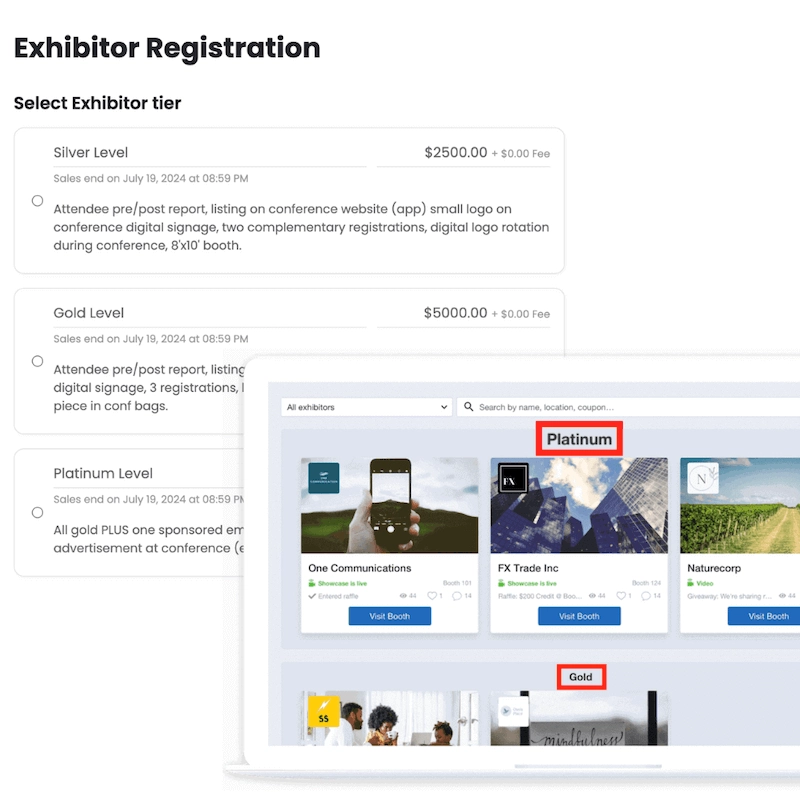
- Exhibitor and sponsor lead retrieval lets vendors scan attendee badges and capture leads on the floor.
- Networking and messaging tools connect attendees to each other, built for participants rather than for a rep managing a book of accounts.
- Sales involvement happens at the booth, after people have arrived.
InviteDesk: Your sales team sits inside the workflow from the first invitation, not at the booth.

- Sales is a stakeholder from the invitation stage — reps see their own guest lists, track who’s responded, add last-minute contacts, and work from a shared dashboard with marketing.
- When a VIP scans in, the platform sends a real-time arrival alert to that guest’s account manager, so the right person greets them at the door.
- Attendance, RSVPs, and no-shows flow back to the rep at account level for follow-up.
Verdict: InviteDesk is built around sales and marketing running the event together; Whova is built around the attendee’s experience of it.
Communication & personalisation
Whova: Communication runs from the organiser out to the whole crowd, through the app’s notification stream.
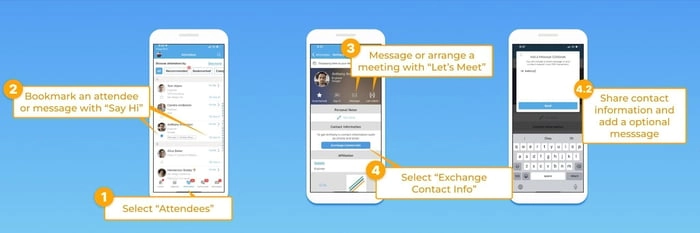
- Broadcast announcements, push notifications, and email updates keep registered attendees informed, all flowing through the same in-app channel.
- A recurring complaint from users is that the stream blurs together — a personal message, a general announcement, and a vendor upsell arrive as the same undifferentiated alert, so anything that should feel personal gets lost in the noise.
- The sender is the event or the platform, not the individual the guest actually knows.
InviteDesk: Every message comes from a person the guest already has a relationship with.
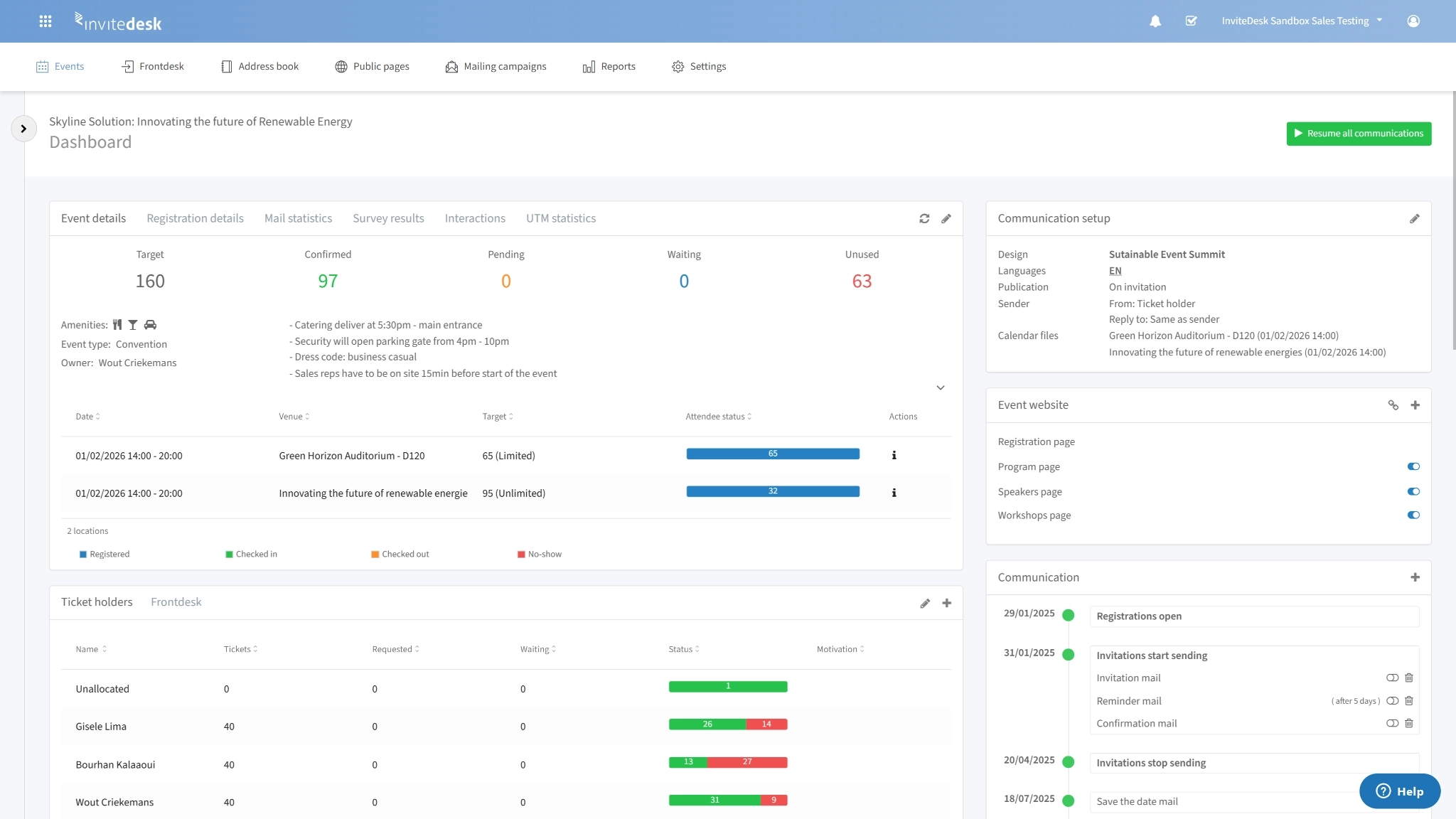
- The “On Behalf Of” workflow lets marketing build the full communication flow once, with every message going out under the account manager’s own name and email address — personalised at scale, with no Salesforce, Marketo, or RevOps support required.
- Each guest receives what reads as a personal invitation from their actual contact, supported by single-setup multilingual sending (Dutch, French, English in one campaign).
- Cleared results from this model: 34% higher open rate and 28% higher registration rate.
Verdict: When whether someone shows up depends on the message reading as personal, a named sender beats a broadcast stream the guest has learned to tune out.
CRM Integration
Whova: CRM connectivity runs through middleware, and the organiser-side reporting has gaps users notice at exactly the wrong moment.
- Connects to CRMs such as Salesforce and HubSpot through Zapier, plus a set of named integrations (Eventbrite, Constant Contact, Cvent, RegFox).
- Zapier-based sync typically pushes registrant data one way into the CRM and needs an individual workflow built and maintained for each action you want automated.
- Organisers report reporting gaps too: exports that leave out registration dates, no easy view of who cancelled, and difficulty finding the newest registrants — the details a sales team needs to act.
- The downstream cost shows up after the event: attendance reaches the CRM only if someone has built a Zap for it, and the sync isn’t real-time, so the 24–48 hour window where follow-up still lands as timely has usually closed before sales has the list.
InviteDesk: Event data lives in your CRM throughout the event, both ways, with no build project.
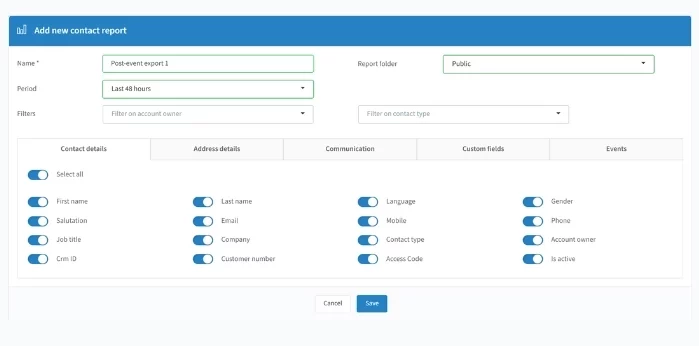
- The Connector module provides native two-way integration with Salesforce, HubSpot, and Microsoft Dynamics 365 — out of the box, no programming, set up in hours.
- Invitation status, RSVPs, check-ins, and account-manager ownership sync to the records your sales team already works in, throughout the event rather than after it.
- That changes what you can report — not just how many people attended, but which named accounts the programme reached and which of them are now in active sales cycles. ABN AMRO Private Banking uses InviteDesk to give sales and marketing live, account-level visibility into who’s invited and who showed up, replacing a manual post-event export. (Confirm ABN AMRO characterisation before publishing.)
Verdict: If event data needs to live in your CRM and flow both ways while the follow-up window is still open, InviteDesk’s native Connector clears a bar Whova’s middleware approach doesn’t.
See attendance sync to your CRM in real time, both ways →
Pricing
Whova and InviteDesk price differently. Here’s what that means in practice.
- Whova doesn’t publish fixed prices. You submit your event details — size, format, duration — and receive a custom per-event quote. Free events carry no platform fee; paid events run a 3.0% platform fee plus $0.99 per ticket.
- InviteDesk runs on a flat subscription, starting from €232/month on an annual plan (with higher tiers at €286 and €424 as event volume and features scale), plus a €1,320 single-event option. Costs are predictable, don’t scale with attendee count, and carry no auto-uplift clause.
Verdict: Whova’s pricing math turns positive when the event is large and earns revenue. For a programme of curated relationship events, InviteDesk’s flat subscription is sized for what you actually run and stays predictable at renewal.
How to choose between Whova and InviteDesk
Three questions settle most of the decision.
- What’s the actual bottleneck — getting the right people there, or engaging the people already there? If recruitment and no-shows are the problem, InviteDesk is built for it. If post-registration engagement and networking is the problem, Whova is built for it.
- Is sales a stakeholder in the event? If reps need account-level visibility, invite quotas, and CRM sync, InviteDesk fits. If the event is organiser-run and attendee-facing, Whova fits.
- What scale and format are you running? Large multi-session conferences, trade shows, association and education events point to Whova. Curated 15–750-guest relationship events where guest quality outweighs headcount point to InviteDesk. If an enterprise platform is also on your shortlist, our Whova vs Cvent comparison covers that end of the market.
InviteDesk: the Whova alternative built for B2B relationship events
Whova earns its reputation for keeping conference attendees engaged once they’ve arrived. The gap it isn’t built to close is the one before the event opens: getting the right named accounts to accept, show up, and land in your sales pipeline.
InviteDesk is the only B2B event management platform that runs the full invitation-to-CRM workflow as the default — out of the box, with no configuration project and no Salesforce dependency. It sits between Eventbrite’s simplicity and Cvent’s complexity, for the mid-market team running relationship-driven events where guest quality matters more than headcount.
Here’s how it works:
- “On Behalf Of” invitations — personal outreach at scale. Marketing configures the full communication flow once, and every invitation goes out under the account manager’s actual name and email address. Guests get what feels like a personal note from their own contact, with no Salesforce, Marketo, or RevOps support required to send it.
- Connector — native two-way CRM sync. Bidirectional integration with Salesforce, HubSpot, and Microsoft Dynamics 365 syncs attendance and engagement back to your account records out of the box, so event activity becomes pipeline data automatically.
- ScanApp & FrontDesk — on-site control with sales alerts. Check guests in by QR code from any phone, print badges on demand, and trigger a real-time alert to the account manager the moment their VIP arrives.
- Guest-list-first tracking — see who matters, not just how many. A live dashboard shows invited versus registered versus declined versus pending by account, with automated waitlists filling declined seats without manual chasing.
Where it shines: relationship events where the same guests recur across the year, where a personal sender changes the response rate, and where sales needs the outcome reflected in the CRM. For regulated teams in financial services, automotive, and professional services, ISO 27001 certification, GDPR compliance, and European data residency come built in as infrastructure rather than as a paid add-on.
Where it falls short: InviteDesk doesn’t do venue sourcing, speaker or exhibitor management, multi-track conference logistics, or virtual event hosting. If you’re running a large multi-track conference or a trade-show floor, that’s not the problem this platform is built to solve — Whova or a dedicated conference platform will serve you better.
What customers say
Invitedesk replaces Excel chaos with unified event control
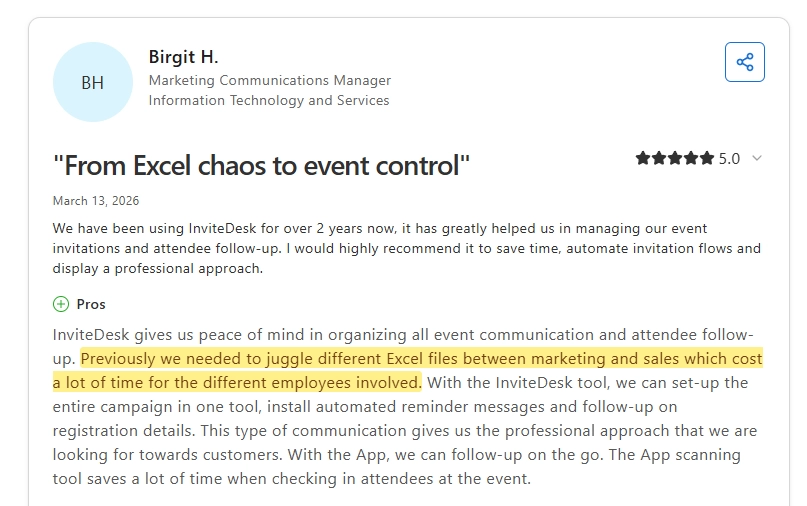
Birgit H. had been managing event invitations and attendee follow-up across multiple Excel files shared between marketing and sales — a process that cost time across every team member involved.
After two-plus years on InviteDesk, the entire campaign runs from a single tool: automated reminders, follow-up on registration details, and mobile check-in on the day.
Supportive, on-time, and proactive customer support
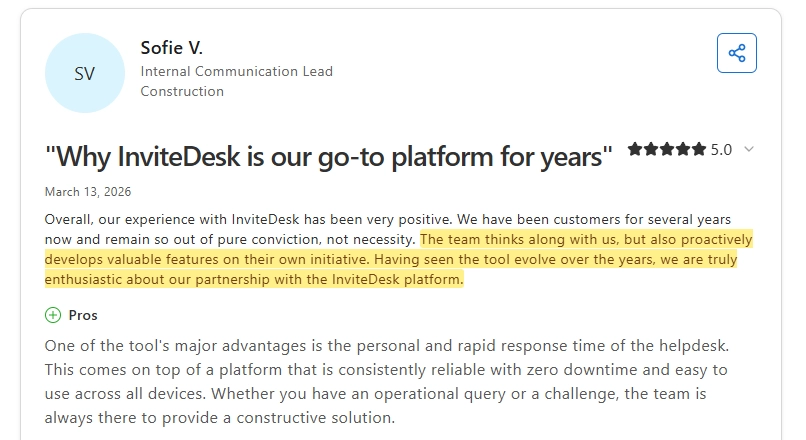
Sofie V., Internal Communication Lead at a construction firm, has been a customer for several years. Her team remains on InviteDesk out of conviction — not because switching is difficult. She highlights zero downtime, cross-device reliability, and a support team that responds personally and quickly to operational queries.
Clearer event data, faster decisions
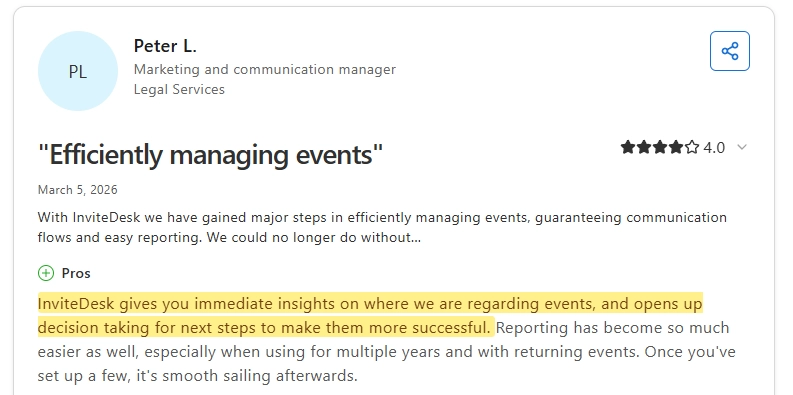
Peter L., Marketing and Communications Manager at a legal services firm, chose InviteDesk over HubSpot Marketing Hub specifically for its event management focus and straightforward implementation. The outcome: immediate visibility into event status, easier reporting across multiple years and returning events, and a setup that runs smoothly once it’s configured.
Want to see how it works?
The verdict
InviteDesk is the better choice for B2B teams running curated, relationship-driven events where the right accounts have to be recruited before the event opens and sales needs the outcome reflected in the CRM. Whova is the better choice for conferences, trade shows, and large gatherings where the priority is engaging and connecting attendees who have already registered.
If your events are large, multi-session, and built around attendee engagement, Whova is a genuinely strong platform and a fair pick. If your events are smaller, account-led, and measured by who’s in the room and what it does for pipeline, InviteDesk gives you:
- Control over a curated guest list, account by account
- Personal invitations sent at scale under each rep’s own name
- Sales and marketing working from the same dashboard, before and during the event
- Native two-way CRM sync that turns attendance into pipeline data
- Fewer no-shows and more senior decision-makers in the room
If you’re a B2B team deciding between Whova and InviteDesk, book a demo to see how InviteDesk handles the invitation-to-CRM workflow for relationship events.
FAQs
Is Whova or InviteDesk better for B2B events?
It depends on the event. For large conferences and trade shows where the goal is attendee engagement and networking, Whova is the stronger fit. For curated, relationship-driven B2B events — client seminars, hospitality, executive briefings — where the goal is getting the right accounts in the room and into the pipeline, InviteDesk is built for that specific job.
Does Whova integrate with Salesforce or HubSpot?
Whova connects to Salesforce and HubSpot through Zapier and a handful of named integrations. That typically moves registrant data one way into the CRM and requires a separate workflow for each automation. InviteDesk offers native, bidirectional sync with Salesforce, HubSpot, and Microsoft Dynamics 365 out of the box.
Can InviteDesk run a large multi-track conference?
InviteDesk is built for curated relationship events of roughly 15 to 750 guests, not multi-track conferences or trade-show floors. It doesn’t handle speaker management, exhibitor management, or virtual hosting. For those formats, Whova or a dedicated conference platform is the better tool.
Which platform reduces no-shows?
InviteDesk is designed around attendance for curated events — personal invitations from the account owner, automated reminders to non-responders, and waitlist automation. Cleared customer results include 40% fewer no-shows. Whova’s strength is engaging attendees who have already registered rather than driving the right people to show up.
How much does Whova cost?
Whova uses custom per-event quotes based on event size, format, and duration. Free events carry no platform fee; paid events run a 3.0% platform fee plus $0.99 per ticket. There’s no public price list. Users tend to find the cost justified for large, revenue-generating conferences, and note that the features many teams need sit at higher tiers, with renewal pricing that climbs year over year.
How much does InviteDesk cost?
InviteDesk runs on a flat subscription from €232/month on an annual plan, with higher tiers at €286 and €424 as event volume and features scale, plus a €1,320 single-event option. (Figures to be confirmed before publishing.)
Is InviteDesk suitable for regulated industries like financial services?
Yes. InviteDesk is ISO 27001 certified, GDPR compliant, and runs on European servers, with a track record in financial services event management. Whova is a US-based platform whose largest user base sits in education, associations, and government, so European data-residency and compliance requirements are worth checking against your own obligations.
Does InviteDesk have an event app for attendees?
InviteDesk includes LineUpr, a companion attendee app for digital agendas, polls, and live Q&A. Its primary strength, though, is the invitation and guest-management workflow before and around the event rather than the in-conference networking experience Whova centres on.